How to Fix a Stuck Zipper on a Winter Coat?

Time:2026-10-28 Author:Mason
0%

A stuck winter-coat zipper can turn a simple morning into a frustrating battle. The fabric may be caught in the slider, the teeth may be misaligned, or cold weather may have stiffened the zipper tape. Learning how to fix a stuck zipper on a winter coat starts with patience, not force. A sudden pull can bend the slider or tear the fabric around the pocket.

Linda MacPhee, a longtime sewing educator, advises, “Never force a zipper; find what is stopping it.” That practical warning guides this article. You will learn how to inspect the zipper closely, release trapped lining, and restore smooth movement with safe household tools. A blunt needle, tweezers, candle wax, or zipper lubricant may help. Use only a small amount. Too much wax can attract dust and leave marks on technical fabrics.

Look closely first.

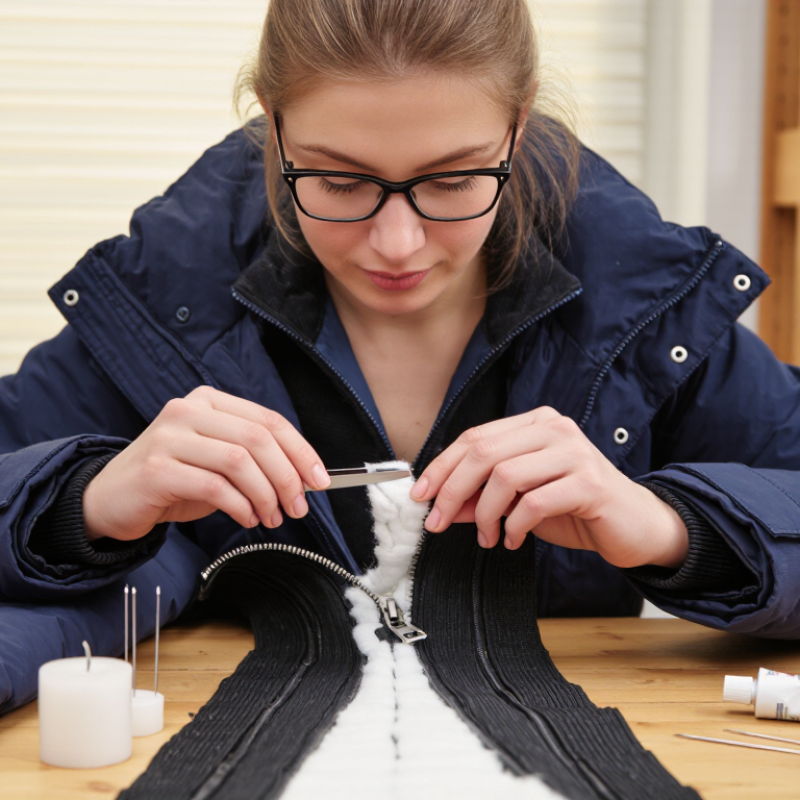
Place the coat flat on a table. Hold the zipper slider steady, then gently pull the trapped fabric away with tweezers. If the teeth look uneven, move the slider backward by a few millimeters. Do not yank it upward. That mistake is common, even for experienced people.

Some coats need professional repair. A damaged slider, missing tooth, or split seam may worsen during home treatment. I have found that slow inspection prevents more damage, although a rushed repair can still fail. This guide explains both the reliable method and the warning signs that mean it is time to visit a tailor or outdoor-gear repair specialist.
How to Fix a Stuck Zipper on a Winter Coat?

Identify the Jam: Check Slider Size (#5 or #8) and Fabric Entrapment

A stuck zipper often needs diagnosis before repair. Start with the slider, not force. Inspect the zipper teeth under good light. A #5 slider usually fits a chain about 5 millimeters wide, while a #8 slider fits one near 8 millimeters. Measure the closed chain with a ruler, or compare it with a correctly sized spare slider. The size marking may be hidden, worn, or missing. My first guess was wrong once because I measured the tape instead of the teeth.

Check for fabric trapped inside the slider. Look at the front, back, and lower edge of the slider. Pull the coat fabric gently away while moving the slider backward, only a few millimeters at a time. Do not yank the pull tab. A blunt needle or tweezers can lift a thread, but avoid cutting the zipper tape. If the fabric is thick, open the coat slightly to reduce tension. This small adjustment often works better than extra force.

If the slider moves but the teeth separate behind it, the slider may be oversized, bent, or worn. Compare its width with the chain size before replacing it. A #8 slider on a #5 chain will not grip correctly. Pliers can slightly narrow a loose slider, but use minimal pressure and test after each adjustment. I have damaged a slider by squeezing too hard. Pause when the metal begins to distort, and consider professional repair if the zipper tape is torn or the bottom stop is loose.

Relieve Tension: Open the Coat and Align Both Tape Edges Evenly

How to Fix a Stuck Zipper on a Winter Coat?

A jammed zipper often reflects uneven tension, not a broken slider. Put the coat on a flat, well-lit surface. Open the coat fully. This matters.

Hold the fabric near the zipper with both hands. Gently pull the front and back panels apart, reducing pressure on the slider. Check both zipper tape edges, then align them evenly from the bottom stop upward. The teeth should face each other in a straight line, without folded fabric beneath them. Move the slider backward a few millimeters, never force it forward. A slow rocking motion can release trapped lining. If the pull feels sharp or unusually tight, stop and inspect the stitching. In my repair experience, forcing one stubborn section often creates a larger misalignment. I once overlooked a twisted inner flap; the zipper moved only after the lining was flattened.

Tips

Keep the coat open while adjusting it. Use a blunt needle or tweezers to lift fabric safely, but avoid pulling loose threads. A small amount of zipper lubricant may help, yet test it on a hidden area first. Do not use oil on technical or light-colored fabric without checking care instructions. After alignment, guide the slider gently through several teeth. If it catches again, reopen the coat and reset both tape edges rather than repeating force. A professional tailor should examine damaged teeth, torn tape, or a slider that separates the teeth.

How to Fix a Stuck Zipper on a Winter Coat?

Relieve tension first: open the coat fully, then align both zipper tape edges evenly before moving the slider.

Practical check sequence: Spend the most time aligning the tape edges evenly. Avoid forcing the slider; if resistance remains, move it gently backward and inspect for trapped fabric or misaligned teeth.

Clear the Teeth: Remove Snow, Ice, and Debris with a Soft Brush

How to Fix a Stuck Zipper on a Winter Coat?

A stuck zipper often needs cleaning, not force. Snow and ice can hide between the teeth, blocking the slider. Move the zipper gently until it stops. Never yank it.

Take the coat indoors and let surface moisture soften naturally. Use a clean, soft brush to sweep along both sides of the zipper. Brush from the top downward, then reverse direction. Pay attention to the bottom box and the area beneath the slider. Small grains of road salt or fabric fibers may be difficult to see. A dry toothbrush can reach narrow gaps. If ice remains, hold a warm, damp cloth near the teeth for a few seconds. Do not pour hot water over the coat. It may spread moisture into the fabric.

Tips: Keep the brush dry during the first cleaning pass. Avoid knives, pins, and sharp tools, which can bend the teeth. Check the zipper tape for loose threads before pulling again. I once tugged too quickly and made a minor blockage worse. That mistake was avoidable. If the slider moves, guide it slowly while brushing ahead of it. Stop when the teeth separate or look misaligned. A zipper that repeatedly sticks may need careful repair by a qualified clothing professional.

Free the Slider: Apply Graphite or Silicone Lubricant, Not Oil

How to Fix a Stuck Zipper on a Winter Coat?

Free the Slider: Apply Graphite or Silicone Lubricant, Not Oil

A stuck winter-coat zipper often results from fabric caught near the slider. Stop pulling immediately. Stretch the coat flat, then inspect both sides under good light. Remove trapped threads with blunt tweezers, never a sharp blade. I once pulled too hard and bent the slider. That small mistake made the repair harder.

For a dry metal zipper, rub a graphite pencil lightly along the exposed teeth. Move the slider only a few millimeters at a time. Graphite reduces friction without making the fabric greasy. However, it may leave dark marks on pale coats. Test it on a hidden area first.

A silicone zipper lubricant works better for many synthetic or coated zippers. Choose a product labeled for clothing or outdoor gear. Apply a tiny amount to the teeth, not the entire coat. Oil is a poor substitute. It can attract grit, stain insulation, and weaken some water-resistant finishes. Keep the slider aligned while moving it gently upward and downward. Do not force it.

If the slider still jams, check for bent teeth or a loose bottom pin. Those problems usually need professional repair. My first attempt was too generous with lubricant, and cleaning the residue took longer than expected. Less is safer.

How to Fix a Stuck Zipper on a Winter Coat? — Free the Slider: Apply Graphite or Silicone Lubricant, Not Oil
Step / Method Recommended Action Suitable Materials Typical Time Effectiveness Important Precaution
1. Stop pulling Hold the zipper slider steady and release tension from the coat panels before attempting to move it again. All winter-coat fabrics and zipper types 30–60 seconds Essential first step Forcing the slider can bend teeth, damage the tape, or tear the fabric beside the zipper.
2. Check for trapped fabric Gently pull the trapped lining or fabric away from the slider while moving the slider backward by a few millimeters. Polyester lining, fleece, cotton blends, and padded garments 1–3 minutes Often effective Use fingers or blunt tweezers; do not cut fabric that may be part of the zipper tape.
3. Clean the zipper track Remove visible lint, salt residue, and grit with a soft dry brush or clean cloth. Metal, molded plastic, and coil zippers 1–2 minutes Low-risk measure Let the area dry fully if water or a damp cloth was used.
4. Apply graphite Rub a small amount of powdered graphite along both sides of the zipper teeth, then move the slider gently back and forth. Best for dry metal zipper teeth; use cautiously on light-colored fabric 2–5 minutes Good for dry friction Graphite can leave dark marks, so keep it away from white, pale, or absorbent fabrics.
5. Apply silicone lubricant Use a small amount on a cloth or cotton swab and apply it to the zipper teeth and slider channel, not directly onto the coat. Metal, molded plastic, and coil zippers 2–5 minutes Generally preferred Test first on a hidden area and avoid saturating insulation, lining, or waterproof coatings.
6. Work the slider gradually Move the slider forward and backward in short, gentle movements until it travels smoothly. All zipper types after cleaning or lubrication 1–3 minutes Improves release Keep the slider aligned with the teeth; stop if resistance increases or teeth begin to separate.
7. Try wax only if appropriate Apply a very thin layer of plain zipper wax or candle wax to the teeth when a dry zipper needs mild lubrication. Most metal and plastic zippers; use sparingly on outdoor clothing 2–4 minutes Situational Excess wax can collect dust and may affect the appearance of some technical fabrics.
8. Avoid household oil Do not use cooking oil, motor oil, or general-purpose oily products on the zipper. Not recommended for coat zippers Not applicable Avoid Oil can stain fabric, attract dirt, weaken some synthetic materials, and make later cleaning more difficult.
9. Inspect zipper alignment Check whether teeth are missing, bent, separated, or unevenly joined after the slider is freed. Metal, molded plastic, and coil zippers 1–2 minutes Diagnostic step A zipper that repeatedly separates may have a worn slider or damaged teeth rather than a lubrication problem.
10. Seek repair when necessary Stop using the zipper and arrange a professional repair if the tape is torn, the slider is cracked, or teeth are missing. High-value, insulated, waterproof, or heavily damaged coats Varies Safest option Do not pry open the slider with sharp tools; this can permanently deform the zipper.
General care note: Apply the smallest practical amount of lubricant, test it on an inconspicuous area, and follow the coat’s care label before cleaning or treating the zipper.

Test and Prevent Recurrence: Inspect Teeth, Stops, and Slider Alignment

A stuck zipper on a winter coat often signals a small alignment problem, not a broken zipper. Lay the coat flat under bright light. Check each tooth for bent metal, trapped thread, or packed fabric. Remove lint with tweezers, but do not force a tooth sideways. A damaged tooth can worsen quickly.

Inspect the top and bottom stops as well. These small pieces should sit firmly and keep the slider on its track. If a stop is loose, the slider may tilt or separate the teeth. Hold the fabric below the slider, then gently move the pull backward. Short movements work better than hard pulling. Add a tiny amount of plain candle wax to the teeth if they feel dry. Avoid oily products, which can stain insulation and attract dust.

Look at the slider from the front and sides. Both zipper tapes should enter it evenly. If one side sits higher, ease the slider back and realign the tapes by hand. I once pulled too quickly and distorted the slider, so patience matters. Test the zipper several times before wearing the coat outside. The teeth should close smoothly without gaps, clicking, or sudden resistance. Check the zipper after washing, especially when loose threads appear near the stops. A tailor or repair specialist should replace a damaged slider or missing stop; improvised repairs may fail in cold weather.

FAQS

Why does a winter coat zipper usually get stuck?

Uneven tension often causes the problem. The slider may be fine, but the zipper tapes are misaligned.

How should I prepare the coat before fixing the zipper?

Lay it flat under bright light. Open the coat fully, then keep the fabric relaxed.

How can I release pressure from the slider?

Hold the fabric near the zipper with both hands. Gently pull the front and back panels apart.

What should I do if fabric is trapped inside?

Move the slider backward a few millimeters. Use a blunt needle or tweezers to lift fabric carefully.

Should I force the slider forward?

No. Hard pulling can bend the slider or damage the teeth. Use short, slow rocking movements instead.

How do I check zipper alignment?

Make both zipper tapes enter the slider evenly. The teeth should face each other in one straight line.

Can I use wax or lubricant on the zipper?

A tiny amount of plain candle wax may help dry teeth. Test any product on hidden fabric first.

What zipper damage needs professional repair?

Seek repair for bent teeth, torn tape, loose stops, or a slider that separates the teeth.

How can I test the zipper after adjustment?

Guide it through several teeth slowly. Check for gaps, clicking, or sudden resistance.

How can I prevent the zipper from sticking again?

Inspect it after washing and remove lint carefully. Avoid loose threads, packed fabric, and rushed pulling.

Conclusion

If you are wondering how to fix a stuck zipper on a winter coat, begin by identifying the cause instead of forcing the slider. Check whether the zipper uses a #5 or #8 slider, then look for trapped fabric, uneven tape edges, or pressure caused by a closed coat. Open the coat fully and gently realign both sides so the zipper can move without extra tension. Next, inspect the teeth for snow, ice, lint, or other debris, and remove buildup carefully with a soft brush.

If the slider remains stuck, apply a small amount of graphite or silicone lubricant to the teeth and work the slider back and forth slowly. Avoid household oil, which can attract dirt and stain the fabric. After freeing the zipper, check for bent or missing teeth, damaged stops, and poor slider alignment. Testing the zipper gently and clearing debris regularly can help prevent the problem from happening again.

Mason

Mason

Mason is a seasoned marketing professional with a deep expertise in the company's offerings and a passion for driving brand awareness. With a strong background in digital marketing strategies, he has an innate ability to connect with diverse audiences and effectively communicate product benefits.......