Winter coats are judged in moments that feel small: waiting for a bus, walking a windy street, or scraping frost from a car window. In 2026, choosing a warm coat means looking beyond a fashionable label. Fiber type, insulation loft, lining, shell fabric, fit, and moisture protection all shape real-world comfort. Down traps heat efficiently for its weight, while quality wool offers breathable warmth and a familiar, structured feel. Synthetic insulation can be a practical choice in damp conditions and often dries faster. No material wins in every climate.
So, what is the warmest material for women's winter coats? For dry, very cold conditions, high-quality down is often among the warmest options for its low weight, especially when protected by a wind-resistant shell. But warmth also depends on fill quality, garment construction, and coverage at the neck, cuffs, and hips. In wet weather, a well-made synthetic fill or wool blend may feel more dependable. Check care labels and compare insulation details, not just the word “warm.” A coat that fits over a sweater without pulling can hold a useful layer of still air. Small details matter.
This guide compares leading coat materials for 2026, including their strengths, trade-offs, and best uses. Some claims on product tags are vague, and even careful comparisons cannot predict every person’s comfort. That is worth remembering. The right choice is the one suited to your winter, daily routine, and willingness to maintain it.
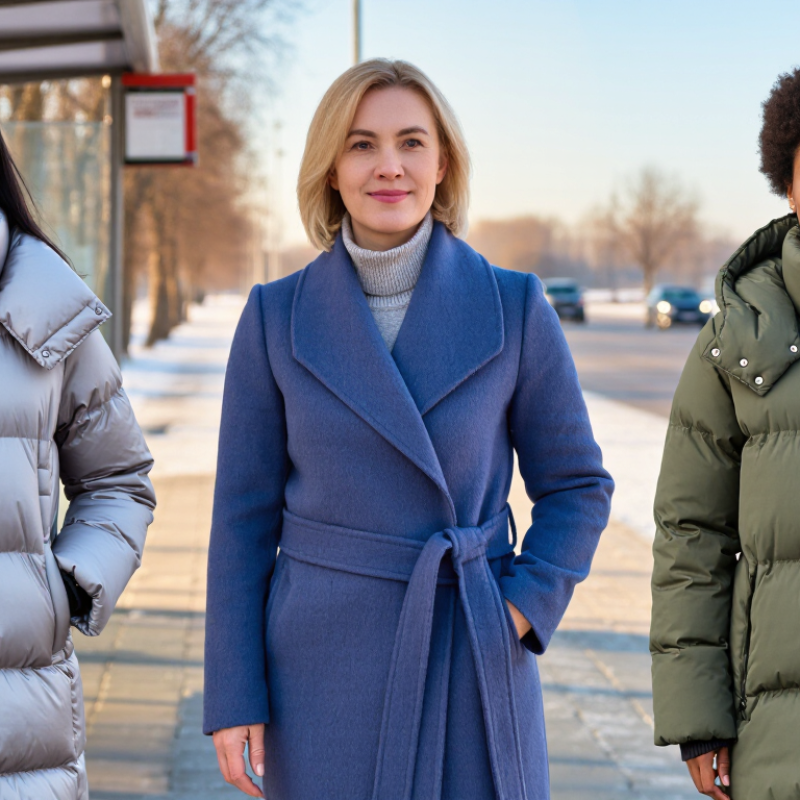
What Makes a Winter Coat Material Warm?
What Makes a Winter Coat Material Warm?
Warmth depends less on fabric thickness than on how well a coat traps still air. Down clusters create loft and hold heat efficiently, but they lose much of that advantage when soaked. Wool fibers naturally trap air and can feel warm in damp weather, though a heavy wool coat may feel bulky. Synthetic insulation is often a practical choice for wet, active days because it dries relatively quickly. No material is perfect.
The outer shell matters, too. A tightly woven, wind-resistant fabric can stop cold air from stripping warmth away. A soft lining adds comfort, but insulation and construction do more of the work. Check the seams, cuffs, collar, and closures: gaps around wrists or a loose front can let heat escape. Fit is a balance. A coat should leave room for a sweater without letting cold air circulate freely. I’ve found that warmth can feel surprisingly different while standing still versus walking briskly.
Tips: Feel the insulation through the coat, and check whether it springs back after gentle pressure. Small details matter. If winters where you live are wet, consider how the coat performs when damp, not only how thick it looks. A warm coat still needs care, and labels can be easy to overlook.
Natural Insulation: Wool, Down, and Shearling
Wool, down, and shearling keep winter coats warm in different ways. Wool fibers trap pockets of air while helping manage moisture, making wool coats comfortable in chilly, changeable weather. They often feel substantial, though a dense coat can be tiring to wear all day. Check the lining and seams, too; warmth depends on construction, not fiber alone.
Down offers excellent warmth with little weight. Its loft comes from clusters that hold still air, and higher fill power generally means more loft for a given amount of down. But down loses much of its insulating ability when wet, so a water-resistant shell matters in snowy or damp conditions. Small details count. Look for evenly filled baffles, with no obvious cold gaps around the shoulders or cuffs.
Shearling combines a wool fleece lining with a leather outer surface, creating a cozy layer against cold wind. It can feel wonderfully warm, but it is often heavier and less packable than down. Care also takes more thought: follow the garment’s care label and avoid storing it while damp. A common mistake is judging warmth by thickness alone. Fit, wind protection, moisture, and how long you’ll be outside all change which material feels warmest.
2026 Top Warmest Winter Coat Materials for Women - Natural Insulation: Wool, Down, and Shearling
| Material |
How It Insulates |
Warmth and Weight |
Performance in Damp Conditions |
Breathability |
Care and Practicality |
Best Suited For |
| Down |
Clusters of soft down trap still air, helping slow heat loss. Loft and fill amount strongly affect warmth. |
Typically offers excellent warmth for its weight and compresses well for packing. |
Untreated down can lose much of its loft and insulating ability when thoroughly wet. Water-resistant treatments and a protective outer shell can help, but do not make every coat waterproof. |
Generally comfortable in cold, dry conditions; comfort also depends on the lining, shell, and garment construction. |
Follow the garment label. Some down coats require careful washing and thorough drying to restore loft; avoid storing them compressed for long periods. |
Cold, relatively dry weather, travel, and situations where low weight and packability matter. |
| Wool |
Wool fibers and the fabric structure hold air while helping regulate heat and moisture. |
Warmth varies with fabric weight, weave, and coat construction. Dense wool coats are often heavier and less compressible than down. |
Wool can absorb moisture and may continue to provide some insulation when damp, but it is not waterproof and can become heavy when wet. |
Often allows moisture vapor to escape; the finished fabric and any lining can affect comfort. |
Check the care label. Many wool coats need brushing, airing, or professional cleaning; protect them from prolonged damp storage and moth damage. |
Everyday winter wear, changeable cool weather, and polished outfits where structure is preferred. |
| Shearling |
Shearling is sheepskin with the wool fleece retained on the hide. The fleece traps air, while the hide forms the outer layer. |
Can be very warm, but is usually heavier and bulkier than down. Warmth depends on fleece density, garment design, and fit. |
The hide and fleece are not a guarantee of waterproofing. Prolonged rain or saturation can damage the material; a suitable outer finish may offer limited protection. |
The fleece can help manage warmth, though lining, hide thickness, and construction influence how the coat feels during activity. |
Usually needs specialist cleaning. Keep it dry when possible, let it air naturally if damp, and avoid direct heat. |
Cold-weather wear when a substantial, close-fitting coat is desired and weight is less of a concern. |
Buying note: There is no universal warmth ranking for these materials. Actual performance depends on insulation quantity and quality, fabric density, coat length and fit, seams, lining, wind protection, and weather exposure. Check the garment’s care instructions and construction details before buying.
Synthetic Insulation: PrimaLoft and Polyester Fill
Fine polyester fibers trap still air, creating warmth without the bulk of a dense wool coat. In many synthetic fills, small fiber clusters help retain some insulation when damp.
Feel the difference. On a cold, wet commute, that can matter more than a lofty coat that loses warmth after getting soaked.
Construction still matters. A coat with thin fill or widely spaced quilting may leave cold spots, even when its insulation sounds impressive. Check fill weight, seam spacing, hood coverage, and room for a mid-layer.
Textile Exchange’s Materials Market Report 2024 estimates polyester represented 57% of global fiber production in 2023. It also reports that recycled polyester made up about 12% of polyester production. These figures describe material supply, not coat warmth or quality. For a more grounded comparison, look for whole-garment thermal testing. ASTM F1291 uses a heated manikin to measure clothing insulation under controlled conditions. A label alone cannot tell you how warm the sleeves feel when wind pushes through.
Comparing Warmth, Weight, and Weather Resistance
Down offers a strong warmth-to-weight ratio, so a well-filled coat can feel light while trapping plenty of heat. Its weakness is moisture: when down gets wet, it can lose loft and warmth. A water-resistant outer shell helps, but it does not make every coat waterproof. Wool feels substantial and can retain some warmth in damp conditions, though it is usually heavier and slower to dry. Feel the difference. A cold, windy walk can reveal gaps around the cuffs or neck that a fabric label cannot.
Synthetic insulation is often bulkier than down, but it tends to handle damp weather more reliably and dries faster. That can make it practical for wet commutes or changing conditions. Still, insulation alone does not determine weather resistance. A tightly woven, wind-resistant shell blocks drafts; a waterproof membrane and sealed seams offer better rain protection. Check the coat’s construction, not just its material name. I’ve found warmth varies noticeably with fit: a coat that is too tight leaves little room for a warm layer, while an oversized one may let cold air in. No chart captures every wearer’s experience.
Choosing a Coat Material for Climate and Daily Use
Choosing a coat material starts with the weather you actually face. NOAA’s U.S. Climate Normals use 30-year averages, so check local winter temperatures and precipitation rather than relying on a national average. A cold, dry commute may suit a down-filled coat, which offers warmth with relatively little bulk. In wet, windy conditions, synthetic insulation is often a more forgiving choice because it retains more warmth when damp. Wool is useful for city wear and changing temperatures, but a dense weave and wind-blocking lining matter as much as the fiber. Wind changes everything.
For practical comparison, ISO 9920:2007 describes methods for estimating clothing insulation, measured in clo; 1 clo equals 0.155 m²·K/W. That figure applies to clothing ensembles, not a coat alone, so treat it as a guide rather than a buying score. Think about your routine: standing at a bus stop needs more insulation than a short walk between warm buildings. Check whether the sleeves cover your wrists, whether a sweater fits underneath, and whether the outer fabric sheds rain. A small trade-off remains: the warmest coat can feel cumbersome indoors. I still find fit easy to underestimate. Try the coat with your usual layers, then move your arms and sit down; comfort on a rack can be misleading.
Conclusion
A winter coat’s warmth depends on more than its outer fabric. Insulation traps pockets of air that slow heat loss, while a wind-resistant, water-repellent shell helps protect that warmth in cold, damp weather. Wool offers breathable, dependable insulation and can remain comfortable through everyday temperature changes. Down is exceptionally warm for its weight, making it useful when lightness matters, though it may lose insulating power when wet. Shearling combines a dense, cozy lining with natural warmth, but can feel heavier. Synthetic fills, including polyester insulation, are often easier to care for and can retain warmth in moist conditions.
So, what is the warmest material for women's winter coats? There is no single answer for every wearer: down provides impressive warmth with little bulk, while wool, shearling, and synthetic fills each have advantages in comfort, durability, and weather resistance. Choose according to your local climate, daily activities, and how much weight or maintenance you prefer. A well-matched combination of insulation and outer-shell protection can matter as much as the material itself.
