2026 Best Down vs Synthetic Insulation Which Is Better?
Choosing the right insulation in 2026 is not simply a battle between natural and man-made fibers. It is a decision about weather, weight, durability, ethics, and maintenance. The key question remains: what is the difference between down and synthetic insulation? Down clusters trap more air for their weight, compress tightly, and feel exceptionally warm inside a dry sleeping bag. Synthetic fibers usually remain warmer when damp, dry faster, and cost less. Simple, but not always.
The U.S. Bureau of Economic Analysis reported that outdoor recreation generated $639.5 billion in value during 2023. That scale reflects a large, demanding market for dependable clothing and equipment. Textile Exchange’s 2024 Materials Market Report also highlights polyester’s dominant role in global fiber production. That matters because most synthetic insulation uses polyester-based fibers, while down requires traceability and responsible animal-welfare standards. The Responsible Down Standard offers one useful benchmark, although certification alone cannot answer every purchasing question.
Outdoor educator and gear expert Andrew Skurka explains the practical trade-off clearly: “Down is lighter, more compressible, and more durable than synthetic insulation.” His point is persuasive, but incomplete. A down jacket can lose loft after a wet chairlift ride. A synthetic jacket may feel heavier and occupy more space in a backpack. It can also degrade faster after repeated compression. Neither option wins everywhere. A damp coastal hike, a dry alpine camp, and a daily urban commute demand different answers. This guide compares warmth, wet-weather performance, packability, lifespan, environmental considerations, and price. The better insulation is the one that still works when conditions become inconvenient.
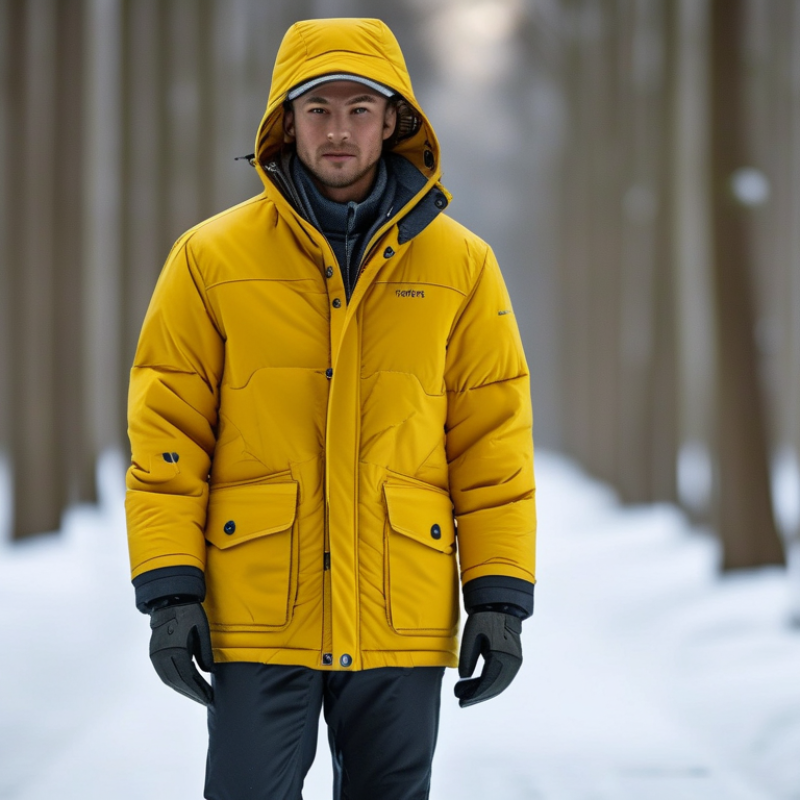
Down vs. Synthetic Insulation: Materials, Structure, and Core Definitions
Down vs. Synthetic Insulation: Materials, Structure, and Core Definitions
Down insulation comes from the soft underplumage beneath waterfowl feathers. Its three-dimensional clusters trap warm air, creating high loft with very little weight. Fill power describes how much space a measured amount of down occupies. Higher loft often improves warmth-to-weight performance, but it does not guarantee better protection in every condition. Down can absorb moisture, lose loft, and dry slowly. I have seen a lightweight down jacket feel cold after damp snow entered through the shell.
Synthetic insulation usually uses polyester fibers arranged as short staples, continuous filaments, or layered webs. These fibers create air pockets through their tangled structure. Synthetic fills generally retain more warmth when damp and dry faster than down. They also tolerate repeated use without requiring perfect weather. However, synthetic insulation is often heavier and less compressible. It may flatten sooner, though construction quality strongly affects durability. The comparison is not completely simple.
Tips: Check the insulation structure, not only the listed weight. For wet hikes, synthetic fill may offer steadier performance. For dry, cold trips, lofty down can reduce pack size. Inspect stitching and seam spacing, because compressed areas create cold spots. Store either type loosely when possible. I once judged warmth by loft alone; wind exposure changed the result. Conditions matter more than a single laboratory number.
FAQS
: No. Fill power measures loft volume per ounce, not direct warmth. Construction and total fill weight matter too.
Its clusters expand and trap a thick layer of air. This creates strong warmth with little weight.
No. Dry down can provide excellent warmth-to-weight performance. Synthetic insulation usually handles moisture more reliably.
Moisture can collapse down’s loft and slow drying. A damp jacket may lose noticeable warmth.
Not always. It keeps more structure during damp conditions, but wind, compression, and long stops can still cause cold spots.
Lightweight down may reduce pack weight during cold, dry trips. Protect it from rain and heavy sweat.
Synthetic insulation often tolerates humidity, repeated washing, and everyday mistakes better. It may cost less initially.
Check total fill weight, garment thickness, hood design, fabric strength, and measured thermal results. Fill power alone misleads people.
Store it loose in a large breathable space. Never leave it crushed inside a small stuff sack.
No. Synthetic fibers depend heavily on fossil-based materials, while down requires traceability and animal-welfare checks.
No. It may reduce virgin-material demand, but washing can release microfibers. Repairing clothing can extend its useful life.
Wear it outdoors during shorter trips first. Personal metabolism changes results, and laboratory figures remain imperfect.
Conclusion
Choosing between down and synthetic insulation in 2026 depends on how each material performs in real conditions. The key question is: what is the difference between down and synthetic insulation? Down uses natural feathers with branching structures that trap warm air efficiently, while synthetic insulation relies on engineered fibers designed to imitate that loft. High-fill-power down, such as 800–1000 fill, generally offers excellent warmth-to-weight performance, compressibility, and long-term packability. Synthetic insulation may be slightly heavier and bulkier, but it can maintain more of its loft when exposed to humidity or light moisture.
In wet or unpredictable weather, synthetic insulation often provides more dependable heat retention because its fibers dry faster and continue insulating after becoming damp. Down can deliver superior efficiency in dry, cold conditions, yet it requires more careful protection. Durability, budget, activity level, climate, and sustainability should also guide the decision. For ultralight travel in dry environments, down may be ideal; for wet climates, frequent use, or easier maintenance, synthetic insulation can be the more practical choice.
